System overview
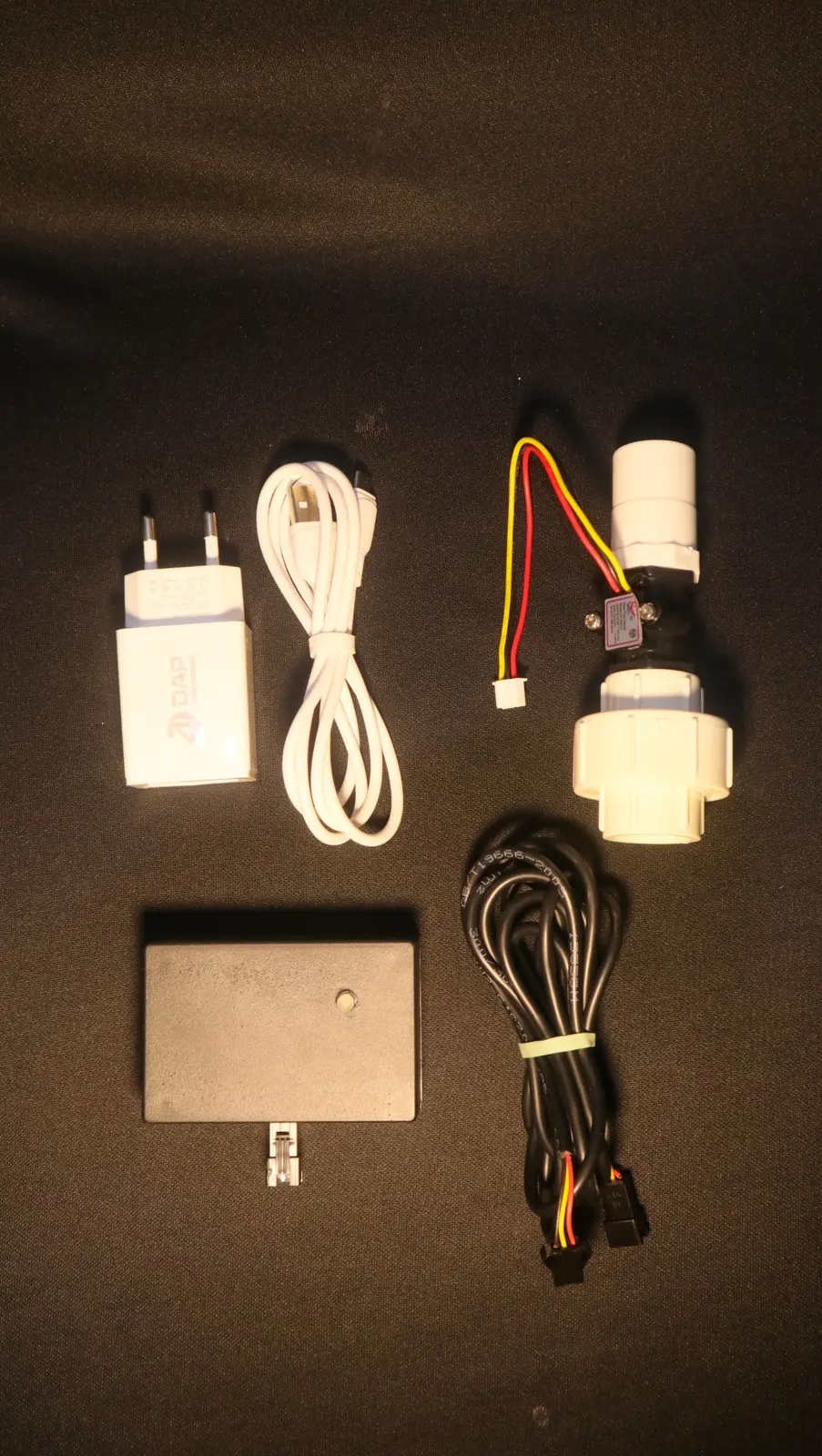
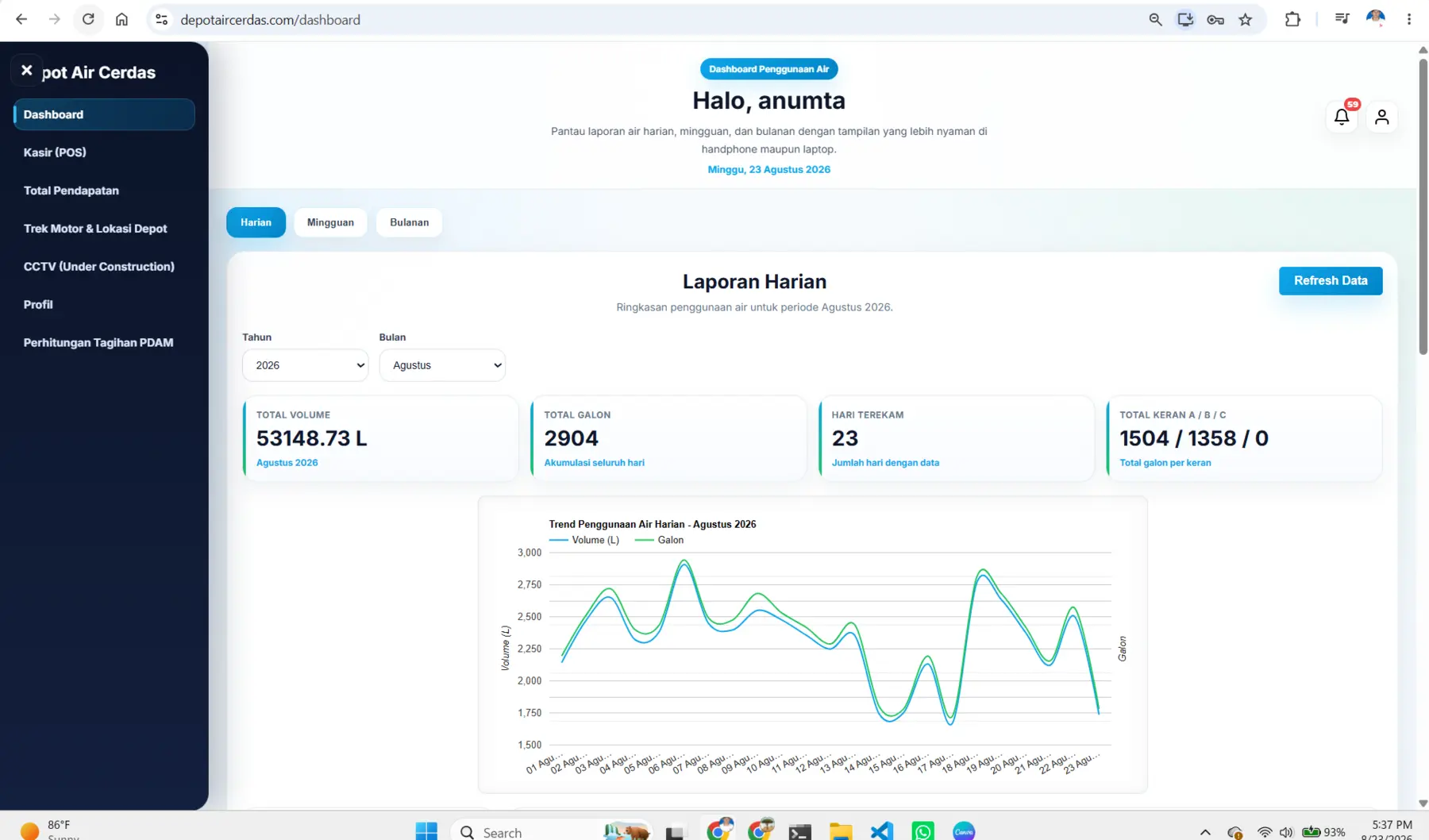
Depot Air Cerdas integrates flow and tank sensors, ESP32 devices, APIs, a database, an operational dashboard, transaction records, tank-condition monitoring, and historical reporting. The system was developed and evaluated through a real field deployment in Jakarta.
Operational need
Refillable-water depot operators already record transactions, but continuous sensor information about flow and tank conditions can provide an additional operational view between manual checks.
How the workflow operates
- Read outlet flow and tank-level sensors
- Transmit periodic device data through ESP32 and API services
- Validate and store measurements
- Display current status and historical trends
- Compare operational records and investigate anomalies
Solution architecture
- Flow and ultrasonic sensors
- ESP32 edge devices
- HTTP-based API communication
- Operational database
- React dashboard and reporting views
Core capabilities
- Sensor & ESP32
- Real-time API
- Tank monitoring
- Operational dashboard
- Transaction records
- Historical reports
Operational value
- Remote visibility of outlet and tank conditions
- A time-based operational record
- Earlier identification of sensor or cabling problems
- Field evidence for improving a deployable IoT product
SCALABILITY
A multi-depot version would add stronger device credentials, HTTPS/TLS, message brokering where useful, observability, automated calibration records, and multi-tenant data separation.